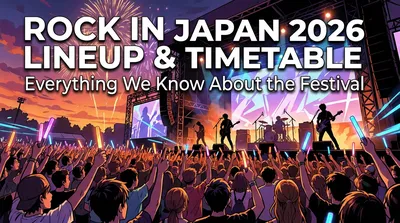
On July 1, 2026, Amazon Prime Video began streaming the Zipangu documentary—a filmed record of what organizers describe as the largest-ever Japanese music festival held outside Japan. The event, which took place on May 16, 2026 (local time) at Brookside at The Rose Bowl in Pasadena, California, brought together seven of Japan's most dynamic musical acts for an audience capacity of approximately 35,000. Now, fans in Japan can watch the full performance archive exclusively on Prime Video, and we finally have the details on what made this event so significant and what viewers can expect from the stream.
For those of us who missed the live event or who simply want to relive it, the documentary offers a front-row view of a historic moment in Japanese music's global expansion—one that brings together viral sensations, rock veterans, and genre-defying artists on American soil.
The Quick Version

- What it is: Zipangu is a documentary of the May 16, 2026 Japanese music festival held at The Rose Bowl in Los Angeles, featuring performances by Ado, Atarashii Gakko no Leaders, Chanmina, HANA, MAN WITH A MISSION, and 10-FEET.
- Where to watch: Streaming exclusively on Amazon Prime Video in Japan, starting July 1, 2026 at midnight JST.
- Why it matters: This was the largest-capacity overseas music festival featuring only Japanese domestic artists, with a 35,000-person venue.
- Who organized it: The event was produced by Cloud Nine and positioned as a showcase of "the present" of Japanese music to the world.
- Archive availability: The stream is archived, meaning Prime members can watch on-demand rather than only during a live premiere window.
What Zipangu Actually Was—And Why It's a Big Deal
The full name of the event was "CLOUD NINE presents 'Zipangu' JAPANESE MUSIC EVENT 2026," and it took place on a Saturday afternoon and evening in Pasadena, just outside Los Angeles proper. The venue—Brookside at The Rose Bowl, located at 1133 Rosemont Ave—is a sprawling outdoor space that can hold tens of thousands of people, and according to official statements, this festival filled a capacity of approximately 35,000. That makes it the largest overseas music festival to feature an entirely Japanese artist lineup, a milestone that organizers and media coverage have emphasized repeatedly.
The concept behind Zipangu was straightforward but ambitious: to present the breadth and energy of Japan's current music scene to an international audience, specifically in the United States where Japanese pop culture has been gaining momentum for years. Rather than focusing on a single genre, the lineup spanned idol pop, hip-hop, rock, and experimental electronic music—a deliberate choice to show that "Japanese music" in 2026 is far more diverse than the stereotypes might suggest.
The name "Zipangu" itself is a historical reference—it's the name Marco Polo used for Japan in his 13th-century travelogues, a romanticized vision of a distant, golden land. By choosing this name, the organizers seemed to be nodding to the way Japan has long captivated the Western imagination, while also asserting that the reality of Japanese creativity in 2026 is even more exciting than the myth.
Who Performed—And What the Lineup Tells Us
The festival featured seven core acts, each representing a different facet of Japan's music landscape. Ado, the enigmatic vocalist whose face remains hidden but whose voice has topped charts worldwide, headlined the event. She rose to fame with "Usseewa" ("Shut Up") in 2020 and has since become one of Japan's most-streamed artists, known for her theatrical, genre-blending sound and her work on anime soundtracks like One Piece Film: Red.
Atarashii Gakko no Leaders (often stylized as ATARASHII GAKKO!) brought their high-energy, retro-inspired performance style—they're known for sailor-uniform stage outfits and choreography that mixes synchronized dance with raw, punk-influenced attitude. Chanmina, a bilingual rapper and singer who grew up between South Korea and Japan, represented the hip-hop and R&B side of the lineup, known for her sharp lyricism and confident stage presence.
HANA, whose real name is Hirose Sana, is a singer-songwriter and former model who's carved out a niche with introspective, electronic-tinged pop. MAN WITH A MISSION—the rock band whose members famously perform in elaborate wolf masks—brought arena-rock energy and years of international touring experience. 10-FEET, a veteran punk-rock trio from Kyoto, rounded out the bill with their decades of grassroots credibility and festival mainstay status in Japan.
There's one small bit of ambiguity in the official materials: some early announcements for the live event included Chiba Yuuki in the lineup, while the Prime Video streaming version lists TeddyLoid (O.A)—a producer and DJ known for his work with idols and electronic acts—in that slot. It's likely that the final edit of the documentary reflects how performances were ultimately sequenced or featured for the stream, but the exact details of this difference haven't been publicly clarified.
How to Watch the Documentary
As of July 1, 2026, the Zipangu documentary is available to stream on Amazon Prime Video—but only for viewers in Japan. According to official announcements, the stream is an exclusive distribution deal with Amazon, and it's region-locked to Japanese accounts. That means if you're outside Japan and hoping to watch, you'll need a Japanese Prime Video subscription and, likely, a VPN or Japanese billing address to access it.
The good news is that this isn't a limited-time premiere: the documentary is archived on the platform, so you can watch it on-demand whenever you like, as long as you have an active Prime membership. There's no separate rental or purchase fee—it's included with Prime Video in Japan, just like any other Prime Video original or exclusive.
For those of us outside Japan, the regional restriction is frustrating but not uncommon for Japanese music content, which often faces complex international licensing hurdles. There's no word yet on whether Amazon plans to expand availability to other regions, though given the international fanbases of artists like Ado and Atarashii Gakko no Leaders, we're hopeful that a wider release might follow if the documentary performs well in Japan.
Why This Festival Marks a "New Era" for Japanese Music Abroad
Coverage of the event in Japanese media has described Zipangu as marking a "new era" for Japanese music on the global stage. That framing might sound like typical promotional language, but there's substance behind it. For years, Japanese artists who wanted international exposure had to navigate a patchwork of anime tie-ins, niche club tours, and one-off festival slots. What Zipangu represents is something different: a large-scale, artist-focused festival on American soil that treats Japanese music as a headlining draw in its own right, not as an add-on or curiosity.
The 35,000-capacity figure is key here. That's a number on par with mid-sized music festivals worldwide—bigger than many regional rock or indie festivals, and a scale that signals serious investment and confidence in audience demand. The fact that the event sold tickets to a diverse American audience (Los Angeles has a significant Japanese and Japanese-American population, but also a broad base of anime, gaming, and J-pop fans from all backgrounds) suggests that the market for Japanese music outside Japan has matured significantly over the past decade.
Part of what's changed is the role of streaming and social media. Artists like Ado have built massive international fanbases on YouTube, Spotify, and TikTok without traditional label promotion in those markets. Atarashii Gakko no Leaders went viral on social media for their chaotic, joyful performances, and their U.S. fanbase grew organically from there. Zipangu was, in many ways, a physical manifestation of this digital-first, border-blurring moment in music.
Another factor is the diversification of the lineup itself. By including hip-hop (Chanmina), rock (MAN WITH A MISSION, 10-FEET), experimental pop (HANA, Ado), and performance-art-adjacent acts (Atarashii Gakko no Leaders), the organizers made it clear that "Japanese music" isn't a single genre—it's a multifaceted ecosystem that can hold its own alongside any music scene in the world.
What the Documentary Captures
While we don't yet have detailed breakdowns of every segment in the Prime Video documentary, the format appears to be a multi-camera concert film, capturing full or near-full performances from each artist along with crowd shots, backstage moments, and the overall atmosphere of the day. The goal, according to Amazon's content description, is to convey not just the music but the energy and cultural significance of the event—what it felt like to be there as Japanese artists commanded a massive stage in Los Angeles.
For fans of any of the individual artists, the documentary offers a rare chance to see a full live set in high quality. Ado, for instance, is known for her reclusive persona—she doesn't show her face in public and rarely does traditional press—so a filmed performance is as close as most of us will get to experiencing her live. Similarly, MAN WITH A MISSION's theatrical, mask-wearing stage show and Atarashii Gakko no Leaders' explosive choreography are both best appreciated in motion, and the documentary format does them more justice than studio recordings or short clips ever could.
The documentary also serves as a snapshot of a specific moment in Japanese pop culture. These seven acts represent different generations, different sounds, and different paths to success—but all of them were at the peak of their powers on May 16, 2026, and all of them were part of the same story about Japanese music reaching outward.
What People Are Saying
"I was at the Rose Bowl and the energy was unreal. Seeing it on Prime Video brought it all back—I'm just sad my friends overseas can't watch it yet."
— Fan on social media
"Finally got to see a full Ado set. The documentary makes you feel like you were there, even if you weren't. Her vocal control live is just as good as on record."
— Viewer comment
"This lineup is everything I love about Japanese music right now—nothing feels formulaic, every artist has their own identity. Zipangu really showcased the diversity."
— Music blogger
"I hope they do this again next year, maybe in more cities. The fact that 35,000 people showed up for a Japanese music festival in LA is proof the audience is there."
— Concert-goer
Frequently Asked Questions
When did the Zipangu festival take place?
The live festival was held on May 16, 2026 (Saturday, U.S. local time) at Brookside at The Rose Bowl in Pasadena, California. In Japan, due to the time difference, that was May 17, 2026 (Sunday).
Where can I watch the Zipangu documentary?
The documentary began streaming on Amazon Prime Video on July 1, 2026 at midnight JST. It's available exclusively to Prime Video subscribers in Japan. There's no confirmed international release at this time.
Who performed at Zipangu?
The festival lineup included Ado, Atarashii Gakko no Leaders, Chanmina, HANA, MAN WITH A MISSION, 10-FEET, and Chiba Yuuki. The Prime Video version also features TeddyLoid (O.A), though the exact on-screen presence of each artist in the final edit varies.
Is there a cost to watch the documentary on Prime Video?
No separate fee beyond your Prime Video subscription. If you're a Prime member in Japan, the documentary is included at no extra charge as an archived stream.
Will the documentary be released outside Japan?
As of now, the stream is region-locked to Japan only. There's been no official announcement about international availability, though international fans are hopeful for a future wider release.
What This Means Going Forward
The Zipangu festival and its Prime Video documentary represent more than just a one-time event—they're a proof of concept. They show that there's a viable, enthusiastic audience for large-scale Japanese music events outside Japan, and that streaming platforms see value in preserving and distributing these performances to a wider audience. For fans, the documentary is both a celebration of what happened on May 16, 2026, and a hopeful signal of what might come next.
If you're in Japan, the documentary is waiting for you on Prime Video right now. If you're elsewhere, we're keeping our fingers crossed for news of an international release—and in the meantime, we're reminded once again of how much the music we love can bring people together, even across oceans and time zones.