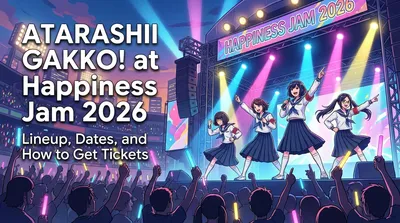
When Ado packed the Peacock Theater in Los Angeles on March 29, 2024, with over 7,000 fans waving light sticks and cheering in cosplay, she wasn't just performing contemporary hits—her setlist included "Mayonaka no Door ~ Stay With Me," a city pop classic from 1979. That moment captured something larger: the way international listeners are discovering that Japanese music culture functions like an enormous, still-unfolding archive, where every search leads to new treasures spanning decades and genres.
We've watched this phenomenon accelerate over the past few years, as streaming platforms and social media algorithms guide curious listeners from viral anime songs to forgotten 1970s albums, from vocaloid experiments to yacht rock-influenced city pop. The sheer depth of Japan's recorded music history—much of which remained largely unavailable outside the country until recently—means that what feels brand new to global audiences often has roots stretching back forty or fifty years.
Let's explore why Japan's music catalog has become such fertile ground for discovery, what's driving the rediscovery of artists like Taeko Ohnuki and Anri, and how today's performers are connecting the past to the present.
The Quick Version

- Japan has been one of the world's top three music markets since the 1980s, yet most of its catalog wasn't exported or promoted internationally until streaming made it accessible
- The city pop revival, fueled by viral tracks like Mariya Takeuchi's "Plastic Love" and Miki Matsubara's "Mayonaka no Door," has introduced millions to 1970s–80s Japanese artists
- Contemporary stars like Ado are bridging generations, performing city pop classics alongside anime-linked hits at sold-out international shows
- Streaming algorithms and YouTube recommendations create discovery chains, leading listeners from one era to another within Japanese music
- Artists like Taeko Ohnuki and Anri, whose work was previously hard to find abroad, now appear regularly on international playlists and vinyl reissues
Why Japanese Music Feels Like an Untapped Archive
Here's what makes the situation unusual: Japan has consistently ranked as the world's second or third-largest recorded music market for decades, producing an enormous volume of albums, singles, and recordings across every imaginable genre. Yet until streaming platforms became dominant, very little of that catalog made its way overseas in official releases. What was available in record stores outside Japan typically focused on a narrow slice—idol pop, anime soundtracks, or a handful of crossover acts.
The result is that from an international listener's perspective, there are literally thousands of albums and artists who were hugely successful domestically but remain almost entirely unknown abroad. When someone stumbles onto a Taeko Ohnuki track from 1977 or an Anri single from 1983, it can feel like discovering a secret—even though these were mainstream hits in Japan at the time. The music isn't obscure in its home context; it's just that the export infrastructure didn't exist to bring it to global audiences back then.
Streaming changed that equation completely. Once platforms like Spotify, Apple Music, and YouTube made Japanese catalogs searchable and playable worldwide, the barriers fell away. Suddenly a listener in São Paulo or Stockholm could explore the same depth of Japanese releases that had always been available in Tokyo. And because so much of it is genuinely new to international ears, the discovery process feels almost endless—hence the metaphor of an archive where "the more you dig, the more veins of ore you find."
The City Pop Revival and Its Architects
The city pop phenomenon is probably the clearest example of this rediscovery in action. City pop—a smooth, sophisticated style that blended American soft rock, funk, and jazz influences with Japanese pop sensibilities—thrived in Japan during the late 1970s and 1980s. Artists like Taeko Ohnuki, whose 1976 album "Sunshower" is now considered a genre landmark, and Anri, known for early-1980s singles like "Remember Summer Days" and the "Cat's Eye" theme, were radio staples and chart successes at the time.
But outside Japan, these records were extremely difficult to find. They weren't pressed for export, and licensing deals were rare. For decades, city pop existed mainly as a collector's niche—vinyl hunters prized original pressings, but the music itself remained largely unknown to casual listeners abroad.
That changed around the late 2010s when YouTube's recommendation algorithm started surfacing city pop tracks to listeners who'd been exploring other retro or chill music. Mariya Takeuchi's "Plastic Love" became the breakout example: a 1984 single that went viral decades later, racking up tens of millions of streams and introducing a new generation to the genre. Miki Matsubara's "Mayonaka no Door ~ Stay With Me," another late-night staple from 1979, followed a similar trajectory, especially on TikTok.
From there, the discovery process snowballed. Once someone heard "Plastic Love," streaming algorithms would suggest Taeko Ohnuki, Anri, Tatsuro Yamashita, and others. Playlists began using "City Pop" as a genre tag, and international labels started licensing reissues and vinyl pressings. Albums that had been out of print for decades suddenly reappeared in record stores from London to Los Angeles, often selling out quickly.
We're now at a point where city pop has become a recognized genre tag worldwide, and artists who never imagined an international audience in the 1970s are seeing their streaming numbers grow year over year. The music hasn't changed—but the ability for people to find it and share it has transformed completely.
How Ado and Contemporary Artists Connect the Generations
What makes the current moment especially interesting is how today's Japanese artists are acknowledging and celebrating that archive while building their own global followings. Ado's March 29, 2024, concert at the Peacock Theater in Los Angeles is a perfect case study. The show was part of her first world tour, "Wish," and it sold out—drawing over 7,000 attendees who filled the venue with blue and red light sticks, many dressed in full Ado cosplay.
Ado herself represents a new generation of Japanese musicians whose path to fame ran through the internet rather than traditional industry channels. She built her early following by posting vocaloid-style covers and original songs on platforms like YouTube and Niconico, and her breakthrough hit "Usseewa" in 2020 became a phenomenon both in Japan and internationally. Her voice work for anime films—including "Tot Musica" and "Shin Jidai" from the One Piece Film: Red soundtrack—cemented her status as a crossover artist who could reach audiences far beyond Japan's borders.
But here's the telling detail: amid a setlist packed with her own anime-linked anthems and contemporary J-pop tracks, Ado included "Mayonaka no Door ~ Stay With Me"—that same Miki Matsubara city pop classic that had gone viral on TikTok. It wasn't just a nostalgic nod; it was a recognition that the city pop revival and her own rise are part of the same story. Both are examples of Japanese music finding enthusiastic global audiences through digital platforms, and both demonstrate that language barriers matter far less than we once assumed when the music itself connects.
Ado's performance style also plays into this. She's known for performing largely in silhouette or behind visual effects, maintaining an element of anonymity—reviewers describe her as a "singer without a face." That approach puts the focus entirely on the voice and the music, which may help explain why her Japanese-language songs resonate so strongly with non-Japanese-speaking audiences. The emotional delivery transcends the literal meaning of the lyrics.
Her world tours have been described as among the largest by a contemporary Japanese solo artist, with one tour reportedly including 34 shows across multiple continents, many of them sold out. That scale would have been nearly unthinkable for a Japanese-language artist even a decade ago, but it's become possible because streaming and social media have built a genuinely global fanbase before the tours even begin.
The Role of Anime, Vocaloid, and Algorithm-Driven Discovery
We can't talk about Japanese music's global reach without acknowledging the pipelines that bring listeners in. For many international fans, the gateway is anime—opening and ending theme songs often become the first Japanese music they actively seek out. Once someone loves a particular anime song, they'll search for more by that artist, which leads them into the broader J-pop ecosystem.
Vocaloid culture has played a similar role, especially for younger listeners. The community of producers creating songs using vocal synthesizer software like Hatsune Miku has been a breeding ground for talent—Ado herself came up through that scene—and those songs circulate widely on YouTube and streaming platforms. The vocaloid aesthetic also overlaps with anime fandom, creating natural crossover appeal.
But perhaps the most powerful driver is simply algorithmic recommendation. When you finish listening to an Ado track, the platform might serve up something from the 1980s that shares a similar mood or musical element. That serendipitous juxtaposition is how someone who came for anime soundtracks ends up discovering Taeko Ohnuki's jazz-influenced pop or the yacht-rock smoothness of Tatsuro Yamashita. The algorithm doesn't care about chronology—it cares about what keeps you listening—and that creates discovery paths that would never have existed in the era of physical retail.
The result is a kind of flattened musical landscape where a song from 1977 and a song from 2024 can sit side by side in the same playlist, both feeling fresh and relevant to the listener encountering them for the first time. That's what makes the "archive" metaphor so apt: the catalog is vast, much of it is new to international audiences, and the tools we now have make it easy to keep exploring.
The Practical Side: Reissues, Vinyl, and Streaming Access
This wave of discovery has had real commercial impact. Labels in Japan and abroad have responded to the city pop revival by licensing reissues and pressing vinyl editions of albums that had been out of print for decades. Taeko Ohnuki's "Sunshower," for instance, has been reissued multiple times in recent years, with each pressing selling briskly despite relatively high import prices. Anri's albums from the early 1980s have also seen reissue campaigns, often timed to coincide with growing playlist visibility.
For collectors and casual listeners alike, this has made it far easier to access music that was previously expensive or difficult to find. Original pressings of sought-after city pop records can still command high prices on the secondary market, but reissues bring the music within reach of anyone who wants it. Streaming, of course, provides the lowest barrier to entry—most of the key city pop catalog is now available on major platforms, often with surprisingly good sound quality.
The challenge for listeners is often knowing where to start, given the sheer volume of material. That's where curated playlists and community recommendations become valuable. Online forums, subreddit communities, and YouTube channels dedicated to Japanese music have become hubs for sharing discoveries and guiding newcomers through the archive.
What People Are Saying
"Ado's LA concert was beyond my expectations. The energy in the room when she performed 'Usseewa' was unreal—everyone knew every word even though most of us don't speak Japanese fluently. And then she dropped 'Mayonaka no Door' and it felt like she was connecting two different eras of Japanese music right there on stage."
— Concert attendee, shared on social media after the March 29, 2024, show
"I went down a rabbit hole after hearing 'Plastic Love' in a YouTube mix, and now I have a whole shelf of city pop vinyl. It's wild how much incredible music was just sitting there, waiting to be discovered. Every album I pick up leads me to three more artists I've never heard of."
— Vinyl collector commenting in an online music forum
"What's amazing about the Japanese music archive is that it's not just one genre. You can go from city pop to 90s Shibuya-kei to idol groups to experimental rock, and all of it has this depth that rewards repeated listening. It's genuinely one of the richest catalogs in the world, and we're only starting to scratch the surface internationally."
— Music blogger writing about the global discovery trend
Frequently Asked Questions
Where can I listen to city pop and other classic Japanese music?
Most major streaming platforms—Spotify, Apple Music, YouTube Music, and Tidal—now carry extensive catalogs of Japanese music, including city pop classics from artists like Taeko Ohnuki, Anri, and Mariya Takeuchi. YouTube also hosts a large community of channels dedicated to curating and sharing Japanese music from various eras. For physical media, reissue labels have been pressing vinyl and CD editions of key albums, available through specialty record stores and online retailers.
Why did it take so long for city pop to become popular outside Japan?
City pop was hugely successful in Japan during the late 1970s and 1980s, but very few of those albums were exported or promoted internationally at the time. Physical distribution was limited, and there wasn't a strong licensing infrastructure to bring Japanese music abroad. The genre's global revival began in the late 2010s when streaming platforms and YouTube's recommendation algorithms started surfacing these tracks to international listeners, often decades after their original release.
Is Ado's music available internationally?
Yes, Ado's music is widely available on major streaming platforms worldwide. Her albums and singles, including tracks like "Usseewa," "Shin Jidai," and her work on the One Piece Film: Red soundtrack, can be streamed on Spotify, Apple Music, and other services. She has also performed extensive world tours, with concerts in North America, Asia, and Europe, many of which have sold out.
Who are the essential city pop artists to start with?
If you're new to city pop, Mariya Takeuchi ("Plastic Love"), Miki Matsubara ("Mayonaka no Door"), Taeko Ohnuki ("Sunshower" album), Anri ("Remember Summer Days"), and Tatsuro Yamashita are widely considered gateway artists. Each offers a slightly different flavor of the genre, from Takeuchi's polished pop perfection to Ohnuki's jazz-influenced sophistication. Starting with curated playlists on streaming platforms is also a great way to sample the genre's range.
Are there other Japanese music genres experiencing similar global discovery?
Yes, city pop is just one part of a broader wave of international interest in Japanese music. Shibuya-kei (a quirky, eclectic style from the 1990s), Japanese jazz fusion from the 1970s, and various eras of idol pop are all finding new audiences abroad. Anime soundtracks and vocaloid-related music continue to serve as entry points, often leading listeners to explore deeper into Japan's recorded music history.
Looking Ahead: What's Next for Japanese Music Globally
What we're witnessing isn't a temporary fad—it's a structural shift in how music circulates and how audiences form around it. The infrastructure is now in place for international listeners to access Japanese music as easily as they can access any other country's catalog, and that access is only going to deepen as more labels digitize their back catalogs and as streaming platforms improve their international licensing.
For artists like Ado, that means building careers that are global from the start, with tours and releases planned for audiences in multiple countries simultaneously. For legacy artists like Taeko Ohnuki and Anri, it means a second or even third act, as new generations discover their work and older albums see reissue campaigns that would have been unimaginable a decade ago.
The metaphor of Japan's music culture as a vast archive that rewards digging is likely to remain accurate for years to come. There are still thousands of albums, artists, and scenes that have yet to find their international moment, and every viral track or sold-out concert creates new pathways for discovery. We're not running out of treasures anytime soon—we're just learning how to find them.