The annual Magical Mirai celebration opened on July 24, 2026, in Hamamatsu—a first for this beloved Hatsune Miku event. Beyond the usual concert announcements, fans worldwide have been asking what actually happens inside one of these performances, how the 3DCG visuals work in person, and what the exhibition experience looks like when you're standing in the venue. We're breaking down the full experience, from the technical spectacle to the hands-on creative zones that make Magical Mirai more than just a concert.
This marks the first time the event has come to Hamamatsu, a city known as Japan's musical instrument manufacturing hub and home to companies like Yamaha and Roland. The connection runs deeper than geography—Hamamatsu's reputation as the "City of Music" makes it a symbolic choice for an event celebrating digital vocal synthesis technology that revolutionized how we create and experience music.
The Quick Version

- Magical Mirai 2026 runs July 24–26 in Hamamatsu at Act City, with additional dates in Osaka (August 14–16) and Tokyo (August 28–30)
- The event combines 3DCG hologram-style concerts featuring Hatsune Miku and five other virtual singers with a full creative exhibition
- Each day offers two performances: daytime shows start at noon, evening shows at 4:30 PM
- This year's theme is "Lake Sonare" (Mizuumi no Sonare), which appears to influence the visual design and setlist
- Tickets bundle concert admission with same-day access to the exhibition halls, creative workshops, and merchandise areas
What the 3DCG Live Concert Actually Looks Like
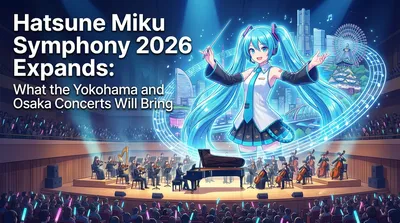
The centerpiece of Magical Mirai is the live performance, though "live" needs some explanation. Hatsune Miku and her fellow performers—Kagamine Rin, Kagamine Len, Megurine Luka, MEIKO, and KAITO—appear on stage as three-dimensional projected figures, performing choreographed routines to songs created by the global Vocaloid community. The technology creates the impression of a physical performer on stage, with lighting, movement, and visual effects synchronized to the music.
According to official descriptions, the performances take place in Act City Hamamatsu's Large Hall, a venue designed for traditional concerts and theatrical productions. The stage setup uses transparent projection screens and carefully calibrated lighting to create depth and presence. Unlike watching a music video on a screen, the projection fills the stage space at human scale, allowing the virtual performers to "interact" with live backing musicians and real-time stage effects.
The performances feature a rotating setlist of Vocaloid songs—compositions created by independent musicians using the Hatsune Miku software, then selected and arranged specifically for Magical Mirai. Each song typically includes custom choreography, costume designs, and visual themes that reflect the creator's original vision while adapting to the live concert format. The show runs approximately two hours, with multiple songs, costume changes, and visual themes throughout.
Inside the Creative Exhibition Experience
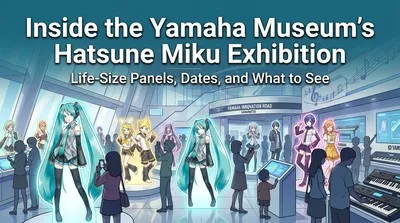
The second half of Magical Mirai takes place across Act City's Exhibition Event Hall and Congress Center floors two and three. This isn't a passive museum walk—the exhibition is designed as an active exploration of Vocaloid culture and creativity. Official descriptions emphasize hands-on experiences and interactive displays alongside more traditional gallery-style presentations.
The exhibition showcases work from artists who create illustrations, animations, music, and other media using Hatsune Miku and related characters. Past exhibitions have included digital art installations, music production demonstrations where visitors can see and hear how Vocaloid software works, and collaborative projects where attendees can contribute to group creations. The exact layout and featured artists typically vary by city and year, though the Hamamatsu event is confirmed to include creator work displays, experiential activities, stage programming, and retail areas.
One consistent element is the merchandise zone, which has become an attraction unto itself. Beyond standard concert goods, Magical Mirai typically offers event-exclusive collaborations with artists, limited-run figures and collectibles, and items tied to that year's specific theme. The "Lake Sonare" theme for 2026 suggests we'll see water and nature motifs across the visual design, though specific products haven't been detailed in official announcements.
Why Hamamatsu Matters for This Event
Bringing Magical Mirai to Hamamatsu for the first time carries symbolic weight. The city has long been central to Japan's music industry—not through performance venues or record labels, but through the manufacturing of musical instruments. Companies headquartered in Hamamatsu developed many of the pianos, guitars, synthesizers, and electronic music tools that shaped modern music production.
That legacy connects directly to Vocaloid technology, which emerged from the same tradition of using technology to expand musical possibilities. Hatsune Miku, created by Sapporo-based Crypton Future Media, represents a digital evolution of the instrument-making philosophy: a tool that allows anyone to create vocal performances without needing a human singer. Hosting the event in Japan's unofficial music technology capital acknowledges that continuity.
Official promotional materials describe Hamamatsu as enabling visitors to "experience Japan-born creative culture" through Magical Mirai. The city government has embraced the event as part of its broader cultural programming, with local businesses and transit systems running collaborative promotions around the dates. For international fans who travel to Japan for Magical Mirai, Hamamatsu offers a different experience than the Tokyo or Osaka stops—a mid-sized city where the event becomes a more concentrated, community-wide celebration.
The Full 2026 Tour Schedule
While Hamamatsu opened the tour, Magical Mirai 2026 is structured as a three-city event across summer 2026. Each location offers the same basic format—3DCG concert performances plus creative exhibition—but with variations in venue size, local collaborations, and presumably some regional differences in featured creators or exhibition programming.
After Hamamatsu wraps on July 26, the event moves to Osaka for August 14–16 at INTEX Osaka, using Halls 3, 4, and 5A. INTEX is one of western Japan's largest exhibition centers, suggesting the Osaka installation may be the biggest of the three stops. The final leg runs August 28–30 in Tokyo at Makuhari Messe, occupying International Exhibition Halls 1, 2, 3, and 9—an enormous footprint that reflects Tokyo's position as the tour finale and largest anticipated audience.
Tickets for all three cities were sold through a combined lottery system that ran from March 13 through April 1, 2026. The tickets bundle concert admission with exhibition access for the same day, available in reserved seat, seated-only reserved, and under-18 categories. The combined ticket approach reflects Magical Mirai's design as a full-day experience rather than just a concert stop.
What People Are Saying
"Seeing Miku perform in Hamamatsu feels really meaningful considering this is where so much music technology was born. It's like bringing her home in a way."
— Fan comment on social media following the July 24 opening
"The 3DCG quality has gotten so much better over the years. The projections look incredibly sharp and the movements feel more natural than ever. You really forget you're watching a hologram."
— Attendee impression from the first Hamamatsu performance
"I love that the exhibition part gives you time to actually engage with the creative side of Vocaloid culture. It's not just about watching a show—you get to see how people make this stuff and try it yourself."
— Exhibition visitor feedback
"The Lake Sonare theme creates this beautiful, dreamy atmosphere throughout the whole event. The water and light motifs work perfectly with Miku's aesthetic."
— Comment on the 2026 visual design
Frequently Asked Questions
When and where are the remaining Magical Mirai 2026 dates?
After Hamamatsu (July 24–26), the event continues in Osaka at INTEX Osaka from August 14–16, then concludes in Tokyo at Makuhari Messe from August 28–30, 2026. Each location runs for three days with multiple performances.
How long does each concert performance last?
The concerts are scheduled to run approximately two hours. In Hamamatsu, daytime shows started at noon and were scheduled to end around 2 PM, while evening performances began at 4:30 PM and ran until approximately 6:30 PM.
Can you visit the exhibition without attending a concert?
No, tickets are sold as combined packages that include both concert admission and exhibition access for the same day. The format treats the concert and exhibition as two parts of a single experience.
What is the Lake Sonare theme about?
Lake Sonare (Mizuumi no Sonare) is the official theme for Magical Mirai 2026. While specific narrative details haven't been publicly outlined, the theme appears to inspire water, light, and nature imagery throughout the event's visual design, stage production, and promotional artwork.
Is the setlist the same at all three cities?
Official sources haven't confirmed whether the performance repertoire is identical across all venues. Past Magical Mirai tours have sometimes featured minor variations or special songs at different stops, though the core setlist typically remains consistent throughout a single year's tour.
What Makes This Year's Event Stand Out
The expansion to Hamamatsu represents Magical Mirai's continued growth beyond Japan's mega-cities into locations with specific cultural connections to music and technology. For fans who've attended previous years, the advancement in projection and visual technology continues to push closer to the experience of watching a physical performer, while the creative exhibition has evolved from a supplementary feature into a substantial part of the event's appeal.
The Lake Sonare theme gives this year's production a unifying aesthetic that influences everything from stage design to merchandise. Based on attendee reactions from the opening days, the water and light motifs create a cohesive visual language that enhances the dreamlike quality inherent to watching a virtual performer "come to life" on stage. As the tour progresses to Osaka and Tokyo, we'll see how the theme adapts to each venue's different scale and technical capabilities.
For newcomers wondering whether Magical Mirai is "worth it" compared to watching concert recordings online, the consensus from attendees points to the presence and energy of the live setting—the sound system, the crowd, the way the projections fill your peripheral vision, and the exhibition's hands-on immersion into Vocaloid creativity. It's a different category of experience than streaming a performance, designed to celebrate both the technology and the global community of creators who've built an entire musical culture around it.