On October 22, 2026, we learned that Kenshi Yonezu has written and will perform "Haru ga Tomori" (春が灯り, "Spring Glows"), the official theme song for The Apothecary Diaries: The Movie—The Secret of the Deceased Consort (劇場版 薬屋のひとりごと 亡妃の秘宝), arriving in Japanese theaters on December 11, 2026. The announcement came with a new trailer featuring the song, a main key visual, and comments from Yonezu himself—all the pieces fans of both the artist and the series have been waiting to see fit together.
If you've followed the beloved mystery series or Yonezu's career of crafting emotionally layered theme songs, you're probably curious about what this collaboration means, what the song sounds like in context, and what else awaits when the film opens. We've gathered everything confirmed so far—from the theme song's debut in the trailer to the special booklet waiting for opening-day audiences—so you can walk in prepared.
The Quick Version

- Theme song: "Haru ga Tomori" (春が灯り, "Spring Glows"), written specifically for the film by Kenshi Yonezu.
- Film release: The Apothecary Diaries: The Movie—The Secret of the Deceased Consort opens in Japan on December 11, 2026.
- Latest trailer: A new promotional video featuring "Haru ga Tomori" was released on October 22, 2026, alongside the theme-song announcement.
- Opening-day bonus: The first 1.5 million theatergoers will receive a booklet titled Kiro no Himawari (帰路の向日葵, "Sunflower on the Way Home"), containing an original post-film story by series author Natsu Hyūga.
- Franchise reach: The Apothecary Diaries has reportedly surpassed 57 million copies in worldwide circulation across all formats.
What "Haru ga Tomori" Brings to the Film
"Haru ga Tomori" is a brand-new composition—not a reworked single or album track—written expressly for The Apothecary Diaries movie. According to the official announcement, Yonezu crafted the song to reflect the story's atmosphere and the emotional journey of its protagonist, Maomao, the sharp-eyed apothecary who navigates court intrigue with equal parts curiosity and caution. We've seen Yonezu do this before—Lemon for the drama Unnatural, Kick Back for Chainsaw Man—but each time, he tailors the melody and lyrics to the specific world of the project, rather than delivering a one-size-fits-all pop anthem.
In the trailer released on October 22, 2026, "Haru ga Tomori" plays over sweeping shots of a water-laced city, hidden treasures, and Maomao's determined expression as she pieces together a mystery that appears central to the film's plot. The song's title—"Spring Glows"—suggests warmth breaking through shadows, a fitting metaphor for a series built on uncovering hidden truths in a place where secrets are currency. Yonezu himself remarked that he wanted the song to capture both the gentleness and the resolve that define Maomao's character, someone who finds light in the darkest corners of the imperial court.
The trailer doesn't yet reveal the full arrangement, but the snippet we hear leans into Yonezu's signature blend of folk-inspired melody and contemporary production—acoustic guitar layered with electronic textures, his voice carrying both intimacy and urgency. For fans of the anime's two television seasons, which used opening and ending themes that balanced traditional and modern sounds, "Haru ga Tomori" feels like a natural extension of that sonic identity, elevated for the larger canvas of a theatrical release.
The Film: What We're Heading Into on December 11, 2026
The Apothecary Diaries: The Movie—The Secret of the Deceased Consort is scheduled to open exclusively in Japanese cinemas on December 11, 2026. The subtitle points to a mystery involving a late consort's hidden treasure, and promotional descriptions mention a journey to a water-based city—presumably beyond the familiar walls of the rear palace where most of the series unfolds. This marks the first theatrical outing for The Apothecary Diaries, which began as a light novel series by Natsu Hyūga before expanding into manga adaptations and the widely praised anime that aired across 2023 and 2024.
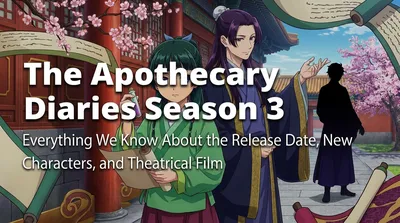
The film's new key visual, released alongside the theme-song announcement, shows Maomao and the enigmatic military officer Jinshi standing before an ornate, canal-lined cityscape, hinting at a setting distinct from the series' usual imperial-court intrigue. If the series thrives on Maomao's methodical detective work and her reluctant entanglement with palace politics, the film appears to widen the geography and raise the stakes, framing the mystery around a treasure that could reshape power dynamics—or simply vanish into legend if Maomao doesn't solve it first.
No international release date or streaming information has been confirmed as of October 23, 2026. Fans outside Japan will likely need to wait for an official announcement regarding subtitled screenings or a later digital release, though the franchise's global popularity—57 million copies in circulation is no small footprint—suggests international distribution is a question of when, not if.
The Opening-Day Booklet and What It Contains
For those planning to see the film during its opening run, there's an additional incentive: a limited-edition booklet titled Kiro no Himawari (帰路の向日葵, "Sunflower on the Way Home"). According to promotional materials, 1.5 million copies of the booklet will be distributed to theatergoers starting December 11, 2026, while supplies last. The centerpiece is an original short story by Natsu Hyūga, written specifically as a post-film epilogue—essentially a "what happens after the credits" tale that extends the movie's narrative rather than rehashing it.
Beyond the story, the booklet reportedly includes cast interviews with the voice actors behind Maomao and Jinshi, visual-development artwork showing the design evolution of the film's new settings and characters, and possibly commentary from the production team. These kinds of theater-exclusive bonuses have become a staple of anime film releases in Japan, rewarding early audiences with content that won't appear in home-video releases for months, if at all. For collectors and completists, the 1.5-million-copy print run is generous by Japanese standards, but it's still first-come, first-served—opening weekend is your safest bet.
Why Kenshi Yonezu and The Apothecary Diaries Make Sense Together
Kenshi Yonezu's career is a catalog of moments where music and narrative storytelling intersect. From Lemon's haunting portrayal of grief and memory to Kick Back's chaotic energy mirroring Chainsaw Man's frenetic pacing, he's consistently proven that he doesn't just write catchy songs—he writes songs that understand the stories they accompany. The Apothecary Diaries is no exception. The series thrives on contrasts: Maomao's clinical detachment versus her hidden compassion, the opulence of the court versus the grim realities she uncovers, the delicate dance between duty and personal truth.
"Haru ga Tomori," even from the brief glimpse in the trailer, seems designed to hold those contrasts in balance. The title itself—"Spring Glows"—evokes renewal and hope, but spring in the context of The Apothecary Diaries is never simple; it's the season when poisons bloom as readily as flowers, when beauty and danger are two sides of the same petal. Yonezu's music has always been comfortable in that duality, and that's precisely why this pairing feels less like a marketing decision and more like a natural fit.
It's also worth noting that Yonezu has a track record of songs that outlive their original projects. Lemon became one of the best-selling digital singles in Japanese history, independent of the drama it was written for. Kick Back introduced a generation of international fans to his work who might never have encountered him otherwise. "Haru ga Tomori" has the potential to do the same—anchoring the film while standing on its own as a piece of Yonezu's evolving catalog.
What People Are Saying
Fans of both Kenshi Yonezu and The Apothecary Diaries responded enthusiastically to the October 22 announcement, with many expressing relief that the pairing lived up to their hopes after months of speculation.
"Yonezu writing for Maomao's story feels so right. She's all logic and quiet strength, and his songs always have that layered emotional depth underneath. I can't wait to hear the full version in theaters."
— Fan comment on social media
"I've been following The Apothecary Diaries since the light novels, and seeing it get a Yonezu theme for the movie feels like the series finally getting the recognition it deserves on a bigger stage. December can't come fast enough."
— Fan comment on social media
"The trailer already has me emotional, and we've only heard a snippet of the song. Yonezu has this way of making you feel the story even before you fully understand the lyrics. That's what made Lemon so powerful, and I think Haru ga Tomori will hit the same way."
— Fan comment on social media
There's also curiosity about when the full song will be available outside the film. Yonezu typically releases theme songs as digital singles shortly before or alongside their associated projects, but no release date for "Haru ga Tomori" has been announced beyond its appearance in the movie.
Frequently Asked Questions
When does The Apothecary Diaries movie open in theaters?
The Apothecary Diaries: The Movie—The Secret of the Deceased Consort is scheduled to open in Japan on December 11, 2026. No international release dates have been confirmed as of late October 2026.
Will "Haru ga Tomori" be available to stream or purchase separately?
Details about a standalone digital or physical release of "Haru ga Tomori" haven't been announced yet. Kenshi Yonezu's previous theme songs have typically been released as singles around the same time as their associated projects, so we may hear more as the December 11 premiere approaches.
What is the opening-day booklet, and how can I get one?
The booklet, titled Kiro no Himawari ("Sunflower on the Way Home"), is a limited-edition gift for theatergoers, containing an original post-film story by series author Natsu Hyūga, cast interviews, and visual-development content. It's reportedly limited to 1.5 million copies, distributed starting December 11, 2026, while supplies last—so attending during opening weekend is your best chance to secure one.
Is there an English-subtitled version planned?
No official announcement about subtitled screenings or international distribution has been made as of October 23, 2026. Given the franchise's global popularity, it's likely that international options will be announced closer to or after the Japanese release.
Do I need to have seen the anime series to follow the movie?
While the film is designed to expand the series' world, The Apothecary Diaries has always rewarded viewers who understand Maomao's character and the dynamics of the rear palace. Watching at least the first season of the anime will give you the context to fully appreciate the story and relationships the movie builds on.
What to Watch for as December 11 Approaches
We're now less than two months away from the film's Japanese premiere, and the October 22 announcement likely marks the beginning of a steady rollout of promotional materials. Expect additional trailers that reveal more of the plot, possibly character posters highlighting new faces introduced in the film, and—most importantly for music fans—a full release of "Haru ga Tomori" in some form, whether as a digital single, a music video, or both.
For those of us outside Japan, the waiting game continues. The good news is that The Apothecary Diaries has a strong international following, which makes a subtitled release or streaming debut far more likely than it would have been even a few years ago. In the meantime, revisiting the anime's two seasons and catching up on the manga or light novels will only deepen the experience when the film finally reaches a wider audience.
What we know for certain is this: Kenshi Yonezu understands how to write a song that becomes inseparable from the story it serves, and The Apothecary Diaries has earned a theatrical spotlight that matches its narrative ambition. When those two meet on December 11, 2026, we'll see whether "Haru ga Tomori" becomes the next song that defines both an artist's catalog and an anime's legacy.