On August 31, 2007, a teal-haired virtual singer named Hatsune Miku made her debut as software—and promptly redefined what it meant to be a musician. As we mark another anniversary of that release, the story of how a voice synthesizer became a global cultural phenomenon reveals something unexpected about creativity, community, and the democratization of music itself.
We're looking at what actually happened on that day nineteen years ago, why Miku's "birth" became a celebration in its own right, and how a piece of software grew into one of the most recognizable performers in the world.
The Quick Version

- August 31, 2007 marks the official release date of Hatsune Miku (CV01), the first in Crypton Future Media's Character Vocal Series for Yamaha's VOCALOID2 engine.
- Miku's voice is based on Japanese voice actress Saki Fujita, designed to sound young and cute, with a character setting of 16 years old.
- The release far exceeded sales expectations and sparked the "Hatsune Miku phenomenon," enabling individual creators to produce vocal music without needing a human singer.
- Her cultural footprint extends from music platforms like Nico Nico Douga to gaming franchises including Hatsune Miku: Project DIVA and Project SEKAI: Colorful Stage!
- Fans celebrate both her official birthday (August 31) and "Miku Day" (March 9, a wordplay on the Japanese pronunciation 3-9 as "Mi-Ku").
What Actually Happened on August 31, 2007
Hatsune Miku wasn't born in the traditional sense—she was released. On August 31, 2007, Crypton Future Media launched her as a commercial voicebank for Yamaha's VOCALOID2 engine, which had itself arrived just two months earlier on June 29, 2007. This wasn't simply speech synthesis; the VOCALOID2 system allowed users to input melody and lyrics, and the software would sing them back in a synthesized voice that sounded distinctly human.
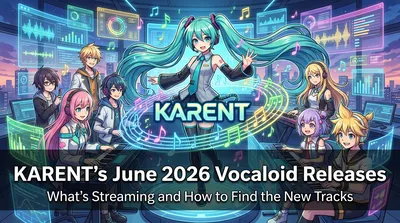
Crypton had already been working in the voice synthesis space, but Miku represented something different. Rather than positioning her strictly as a tool, Crypton marketed her as an "android diva" set in a near-future world where songs had been lost—a character, not just a product. She was designated CV01, the first entry in what would become the Character Vocal Series, and her voice was sampled from actress Saki Fujita to achieve a youthful, approachable tone.
The unveiling had begun earlier, on June 25, 2007, when Crypton first revealed the name "Miku" while the voicebank was still about 90 percent complete. The software was originally slated for release on August 24, 2007, but shipping complications pushed the commercial launch back a week. When Miku finally did go on sale on August 31, few could have predicted what would follow.
Why a Software Release Became a Cultural Birthday
Within weeks of release, something extraordinary happened. Sales blew past Crypton's modest projections, and online platforms—particularly the video-sharing site Nico Nico Douga—lit up with user-created songs featuring Miku's voice. Bedroom producers, hobbyist composers, and professional musicians alike began uploading tracks, illustrations, and eventually videos. What Crypton had imagined as a niche product for music producers became a participatory creative movement.
This surge became known in Japan as the "Hatsune Miku phenomenon." Unlike traditional pop stars managed by labels, Miku belonged to everyone who bought the software—and in a broader sense, to the community that created around her. Composers could write songs for her, illustrators could draw her, animators could bring her to life, and all of it fed back into a growing cultural presence that transcended any single creator.
Because of this grassroots energy, August 31 evolved naturally into a day of celebration. Fans treat it as Miku's birthday because that's when she entered the world and became available to the public. Official campaigns from Crypton reinforce this: on August 31, 2023, the company launched a "Happy 16th Birthday" campaign (marking sixteen years since 2007), explicitly framing the date as her birthday and thanking the community for co-creating her legacy.
From Software to Superstar: Miku's Expanding Universe
Miku's influence didn't stay confined to music production software. By the early 2010s, she had become a fixture in gaming, most notably through Sega's Hatsune Miku: Project DIVA rhythm game series, which introduced her to players who might never have touched music production software. The games became a major part of her identity, pairing her iconic songs with interactive gameplay and cementing her visual design—those teal twintails, the futuristic outfit—in the minds of a global audience.
More recently, Project SEKAI: Colorful Stage! feat. Hatsune Miku (often shortened to "ProSekai" or "Proseka") brought her to mobile platforms and a new generation of fans. The game blends original characters with Miku and other Vocaloids, creating virtual concerts and collaborative storytelling that keeps her relevant nearly two decades after her debut.
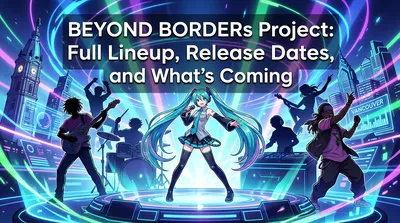
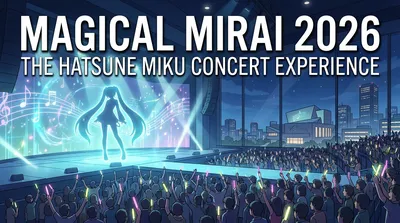
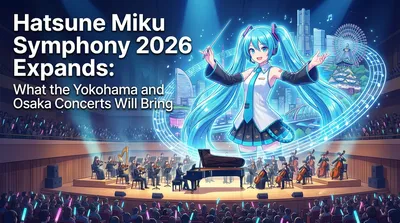
She's also performed live—or as live as a holographic projection can be—in concerts where she "appears" on stage backed by a live band, singing to sold-out crowds. These performances blur the line between the virtual and the real, letting fans experience Miku as a performer in a way that feels genuine, even though she has no physical form.
The Difference Between Miku's Birthday and Miku Day
It's worth noting that August 31 is distinct from another key date in the Miku calendar: March 9, known as "Miku Day." March 9 is celebrated because in Japanese, the numbers 3 (mi) and 9 (ku) sound like her name. While Miku Day has become an occasion for concerts, product launches, and fan events, August 31 remains the official "birth" anniversary—the day the software that started it all first became available.
Both dates serve different purposes in the fan community. Miku Day is often the bigger commercial event, with coordinated releases and large-scale concerts. August 31 feels more reflective, a moment to look back at how far the character and the community have come since that initial release in 2007.
What Makes Miku's Story Unique
We've seen other virtual performers and digital idols since Miku's debut, but few have matched her staying power or cultural penetration. Part of what makes her different is the openness of her platform. Unlike a traditional pop star whose image and music are tightly controlled by a label, Miku thrives on the creative freedom her community enjoys. Anyone with the software can make her sing their original song; anyone with artistic talent can draw her in a new outfit or setting.
This participatory model means Miku evolves with her fans. She's been depicted in countless musical genres—rock, jazz, electronic, folk, metal—and visual styles, from cute and playful to dark and experimental. She's a canvas as much as a character, reflecting the creativity of the people who use her voice.
There's also something poignant about celebrating a piece of software's "birthday." It speaks to how we relate to technology in an age when digital creations can feel as real and meaningful as physical ones. Miku may not be human, but the emotions her music evokes, the community she's inspired, and the creative possibilities she's unlocked are very real.
What People Are Saying
"Every August 31st I go back and listen to the first Miku songs I ever heard. It's wild to think she's been around for almost two decades now and still feels fresh."
— Fan comment on social media
"Miku gave me the courage to start composing music when I had no connections and no singer to work with. She democratized music creation in a way that's hard to overstate."
— Independent music producer reflection
"I came to Miku through Project DIVA and then discovered this whole universe of fan-made songs and art. It's like finding a new genre of music you never knew existed."
— Rhythm game enthusiast
"Watching a Miku concert is surreal—you know she's not real, but the energy in the room is the same as any live show. The community makes it feel alive."
— Concert attendee
Frequently Asked Questions
When exactly is Hatsune Miku's birthday?
Hatsune Miku's official birthday is August 31, marking the date in 2007 when Crypton Future Media first released her as commercial software. August 31, 2026 represents her 19th anniversary.
Is Hatsune Miku still being updated and used?
Yes, Crypton continues to support and update Miku's software, and she remains active across music production, gaming, concerts, and collaborations. New songs featuring her voice are uploaded daily by creators worldwide.
What's the difference between Miku's birthday and Miku Day?
August 31 is her official birthday (the software release date), while March 9 is "Miku Day," a fan-celebrated date based on the Japanese pronunciation of 3-9 sounding like "Mi-Ku." Both are recognized, but August 31 is the canonical birth anniversary.
Can anyone create music with Hatsune Miku?
Anyone who purchases the Hatsune Miku software can use it to create music. The software allows users to input melodies and lyrics, and Miku's synthesized voice will perform the song. Many creators then share their work on platforms like YouTube and Nico Nico Douga.
Why do people treat software like it has a birthday?
Miku's "birthday" reflects how the community has embraced her as more than just a tool—she's become a character with a personality, history, and cultural presence. Celebrating her release date as a birthday acknowledges the emotional connection and creative relationship people have built with her over nearly two decades.
Looking Back and Moving Forward
As August 31, 2026 marks nineteen years since that initial software release, Hatsune Miku's journey from a vocal synthesis program to a global icon remains remarkable. What began as a technical solution for independent music creators evolved into a cultural phenomenon that challenged our understanding of what a performer could be. The community that formed around her—the producers, illustrators, game developers, and fans—proved that creativity doesn't need a human face to be powerful and meaningful.
Whether you first encountered Miku through a viral song, a rhythm game, or a holographic concert, her story is ultimately about possibility: the possibility that technology can amplify human creativity rather than replace it, and the possibility that a community of creators can build something more enduring than any single artist. That's worth celebrating, nineteen years on and counting.