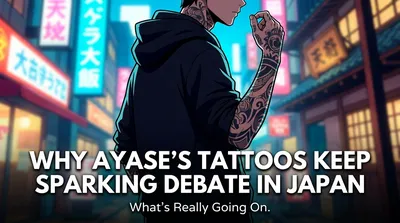
When photos of YOASOBI's Ayase began circulating in mid-June 2026 showing tattoos covering his arms, neck, hands, and even his fingertips, fans around the world did a double-take. The composer and producer behind some of J-pop's biggest international hits looked almost unrecognizable from the clean-cut musician who performed at NHK's Kōhaku Uta Gassen in 2023. So what prompted this dramatic transformation, and why did Ayase choose to embrace such an extensive tattooed look?
The answer goes deeper than a simple style change. Ayase's visual evolution reflects a deliberate return to his musical roots and a statement about artistic identity that he's been building toward for years—one that just happens to clash with Japan's complicated relationship with visible tattoos.
The Quick Version

- Ayase now has tattoos covering both arms, his neck, the backs of his hands, and his fingertips, along with facial piercings and alternating hair colors
- The transformation became widely noticed in June 2026, though he'd been gradually adding tattoos since at least 2025
- Before YOASOBI, Ayase spent nine years as a vocalist in a post-rock band and has stated he always wanted to embody a rock-star aesthetic
- Fan reactions have been mixed but largely supportive, with many saying "if he likes it, that's fine" and recognizing it as artistic self-expression
- The look has created some friction with broadcast standards, particularly in South Korea where his tattoos were reportedly blurred during television appearances
What We Know About Ayase's New Look
The extent of Ayase's body art became a major talking point on Japanese social media in June 2026 when entertainment outlets began running stories about his transformed appearance. His tattoos now run from both arms up to his neck area and down to the backs of his hands and individual fingers—what Japanese media described as "tattoos packed in densely." He's also added a mouth piercing and large-gauge ear piercings.
His hair color has shifted multiple times throughout this transformation. At NHK Kōhaku Uta Gassen in December 2023, Ayase appeared with relatively conservative black hair. By the time YOASOBI performed at DEAD POP FESTiVAL at Higashi Ogishima East Park in Kawasaki on June 30, 2025, he'd switched to spiky blond hair paired with sunglasses and visible tattoos—a look that gave him a distinctly rock-influenced appearance. In early January 2026, he posted Instagram photos showing he'd returned to black hair while keeping all the tattoos and piercings.
In that New Year's post on January 5, 2026, Ayase shared that he was spending the holiday eating mochi and working intensely on music production. He wrote that he had set clear goals for 2026 and would give everything to achieve them, though he didn't elaborate on what those goals were.
Why Ayase Chose This Path: The Rock Background Nobody Talks About
Here's what most coverage of Ayase's transformation misses: this isn't a sudden reinvention. It's actually a return to who he was before YOASOBI made him a global pop phenomenon.
Before forming YOASOBI with vocalist ikura in 2019, Ayase spent approximately nine years as the vocalist for a post-rock band. In a 2023 interview with MAH from the rock band SiM, Ayase revealed that he had always admired band music and wanted to be a rock star. That identity—built over nearly a decade—didn't disappear when "Yoru ni Kakeru" ("Racing into the Night") turned YOASOBI into one of Japan's most successful musical acts worldwide.
What likely happened is that YOASOBI's explosive success in the early 2020s required Ayase to present a more mainstream, broadcast-friendly image. The duo was performing on national television, representing Japanese pop culture internationally, and attracting fans across age groups. A heavily tattooed look would have been a liability in many of those contexts—Japanese television tends to blur or cover tattoos, and corporate partnerships often favor more conventional appearances.
By 2025, YOASOBI had already proven their staying power. They'd conquered streaming platforms, performed at major international festivals including Coachella (where Ayase reportedly already had blond hair in April of that year), and built a fan base that followed them for their music rather than their image. That security likely gave Ayase the freedom to reclaim the aesthetic he'd always identified with.
It's also worth noting that Ayase's Instagram profile describes him as "VOCALO P / YOASOBI"—emphasizing his identity as a Vocaloid producer first. In the Vocaloid and alternative music communities in Japan, visual experimentation and boundary-pushing aesthetics are far more accepted than in mainstream J-pop. Ayase may simply be aligning his appearance with the creative community where he's always felt most at home.
The Cultural Context That Makes This Complicated
Ayase's transformation carries extra weight because of Japan's fraught relationship with tattoos. In Japanese culture, extensive tattoos have long been associated with organized crime, and that stigma persists even as younger generations embrace body art as self-expression. Many public baths, gyms, and pools still ban tattooed visitors, and most major companies discourage visible tattoos in professional settings.
For a public figure in Japan's entertainment industry, choosing to cover yourself in visible tattoos is still a statement—one that can close certain doors. The fact that Ayase made this choice anyway suggests he's prioritizing artistic authenticity over commercial palatability. He's essentially saying that being true to his identity as an artist matters more than maintaining the broadest possible appeal.
This has created some practical complications. There have been reports that when Ayase appeared on television in South Korea, broadcasters applied a full mosaic blur over him due to his tattoos and dyed hair—reflecting broadcast standards that are even stricter than Japan's. Similar blurring happens on Japanese television as well, though the exact policies vary by network and program.
What's less clear is whether this affects YOASOBI's commercial opportunities. Major brand partnerships in Japan typically prefer "clean" celebrity images, and some corporate sponsors might hesitate to work with an artist sporting such extensive visible tattoos. Then again, YOASOBI's core audience skews younger and more international—demographics that are generally more accepting of tattoos and alternative aesthetics. The duo's streaming numbers and concert attendance may insulate them from any traditional media backlash.
What's Still Unclear About the Transformation
Despite all the photos and fan discussion, several key questions remain unanswered. We don't know exactly when Ayase got his first tattoos or how long the full collection took to complete. The timeline suggests he began adding them sometime in 2024 or early 2025, but he hasn't shared the story publicly.
We also don't know whether the tattoos carry specific personal meaning or are primarily aesthetic choices. Some artists use tattoos to mark important life events or relationships; others simply appreciate the visual art form. Ayase hasn't explained the significance of his particular designs, and photos in circulation don't show the tattoos in enough detail to identify clear themes or symbols.
The mention of ikura's "impression changing completely" in recent coverage is similarly vague. While the headlines paired her transformation with Ayase's, the specific details of how her styling has evolved aren't well documented in English-language or translated sources. It appears her look has shifted enough to surprise fans, but whether that means hair color, makeup, fashion choices, or something else isn't confirmed.
Perhaps most importantly, we don't know how—if at all—this visual transformation will influence YOASOBI's music going forward. Ayase mentioned having clear goals for 2026 in his January post, but he didn't specify whether those involved a shift in YOASOBI's sound, new solo projects, or a return to band work. The visual change could signal a creative evolution, or it could simply be a personal choice unrelated to the duo's musical direction.
What Usually Happens When Japanese Artists Make This Choice
Looking at how similar transformations have played out for other Japanese artists can give us some clues about what might come next for Ayase.
One possibility is that he continues with YOASOBI exactly as before, with the tattoos simply becoming part of his established image. Artists like ONE OK ROCK's Taka have maintained successful mainstream careers while sporting tattoos, particularly as their international profile grew and their fan base became less dependent on traditional Japanese media exposure.
Another path is that Ayase uses this visual shift as a bridge to launch more alternative musical projects alongside YOASOBI. His background in post-rock and his stated desire to be a rock star suggest he might explore heavier or more experimental sounds that align better with his current aesthetic. This wouldn't necessarily mean the end of YOASOBI—many Japanese artists successfully juggle a pop project with a more alternative side project.
A third scenario is that the tattoos become a point of friction that gradually pushes YOASOBI away from mainstream Japanese television and toward international touring and streaming. Given that YOASOBI already has massive global reach (their music has been streamed billions of times worldwide), they may not need conventional Japanese media exposure the way they did in their early years. The transformation could signal a strategic shift toward prioritizing international festivals, streaming platforms, and tour venues over domestic TV appearances.
It's also possible that Japanese media and corporate attitudes continue to evolve, making Ayase's tattoos less of an issue over time. Younger Japanese audiences are increasingly accepting of tattoos, and as that generation gains purchasing power, brands may become more willing to work with tattooed celebrities. Ayase could end up being part of the wave that normalizes visible tattoos in Japanese entertainment.
What People Are Saying
"He looks completely different from before. I almost didn't recognize him at first."
— Fan comment on Japanese social media, June 2026
This reaction captures the initial shock many fans felt. It's worth remembering that for millions of people, YOASOBI's image is tied to the relatively clean-cut appearance Ayase and ikura presented during their breakthrough years. Sudden change always startles people, even when they ultimately accept it. The surprise doesn't necessarily mean disapproval—it's the natural response when someone you feel you know shows you a side of themselves you hadn't seen before.
"He looks like another person, but that's part of being an artist. Self-expression is everything."
— Fan comment on Japanese social media, June 2026
This reflects a more thoughtful perspective that's become increasingly common in responses to Ayase's transformation. Many fans recognize that creative people need the freedom to evolve and express themselves authentically. There's a growing understanding, particularly among younger audiences, that asking artists to maintain a fixed image forever is both unrealistic and potentially stifling to their creativity. If the tattoos represent who Ayase really is, forcing him to hide that would be asking him to live inauthentically.
"If he likes it himself, that's fine. It's his body and his choice."
— Fan comment highlighted in Japanese entertainment coverage, June 2026
This comment, which appeared prominently in headlines about the transformation, represents what seems to be the majority sentiment among YOASOBI's fan base. Even fans who might not personally love the heavily tattooed look recognize that it's not their decision to make. This attitude reflects a broader generational shift in how people think about body autonomy and personal expression—the idea that as long as someone's choices aren't harming others, those choices deserve respect even if we wouldn't make them ourselves.
Frequently Asked Questions
When did Ayase get his tattoos?
The exact timeline isn't public, but photographic evidence suggests Ayase began getting tattoos sometime in 2024 or early 2025 and has continued adding to them since. He appeared with relatively few or no visible tattoos at Kōhaku in December 2023, but had extensive tattoos visible by the DEAD POP FESTiVAL performance on June 30, 2025.
Does Ayase's heavily tattooed look affect YOASOBI's career?
It's too early to say definitively, but there are potential complications with television appearances and some corporate partnerships in Japan, where visible tattoos still carry stigma. However, YOASOBI's strong international presence and streaming success may insulate them from significant negative impact, particularly since their core fan base skews younger and more accepting of tattoos.
What do Ayase's tattoos mean?
Ayase hasn't publicly explained the meaning or symbolism of his specific tattoos. We don't know whether they carry personal significance or are primarily aesthetic choices. Until he chooses to share that information, any interpretation would be speculation.
Has ikura also changed her appearance dramatically?
Japanese media has reported that ikura's visual impression has also changed significantly, surprising fans, but specific details about her styling evolution aren't well documented in available sources. The reports suggest the change is noticeable enough to be mentioned alongside Ayase's transformation, but the exact nature of her new look remains unclear.
Why would a successful pop artist risk their image with extensive tattoos?
For Ayase specifically, the tattoos appear to represent a return to his authentic identity as someone who spent nine years in a rock band before YOASOBI's pop success. Artists who've achieved financial security and proven their staying power often feel more freedom to express themselves authentically rather than maintaining an image chosen primarily for commercial appeal.
Are tattoos becoming more accepted in Japan?
Attitudes are shifting, particularly among younger generations, but the change is gradual. Many public facilities still ban tattooed visitors, and corporate environments generally discourage visible tattoos. However, in creative industries like music, especially among artists with international audiences, there's significantly more acceptance than in traditional Japanese business culture.
The Bigger Picture Beyond the Ink
What we know for certain is that Ayase has chosen to present himself in a way that feels authentic to his identity as an artist, even though that choice comes with potential professional complications in Japan's entertainment industry. His transformation from the clean-cut composer of "Yoru ni Kakeru" to a heavily tattooed, rock-influenced visual artist reflects a deliberate decision to prioritize self-expression over maximum commercial palatability.
What we don't know is how this will shape YOASOBI's future—whether it signals a musical evolution, a shift toward international focus, or simply a personal choice that won't affect the duo's creative direction at all. Ayase mentioned having clear goals for 2026, and we're now halfway through that year without knowing what those goals are or whether we'll see their fruits soon.
As YOASOBI continues to release music and perform throughout 2026, we'll learn whether Ayase's visual transformation was simply a reclaiming of his pre-YOASOBI identity or the first visible sign of a larger artistic shift—and whether the music industry, in Japan and globally, will embrace or resist an artist who refuses to choose between mainstream success and authentic self-expression.